
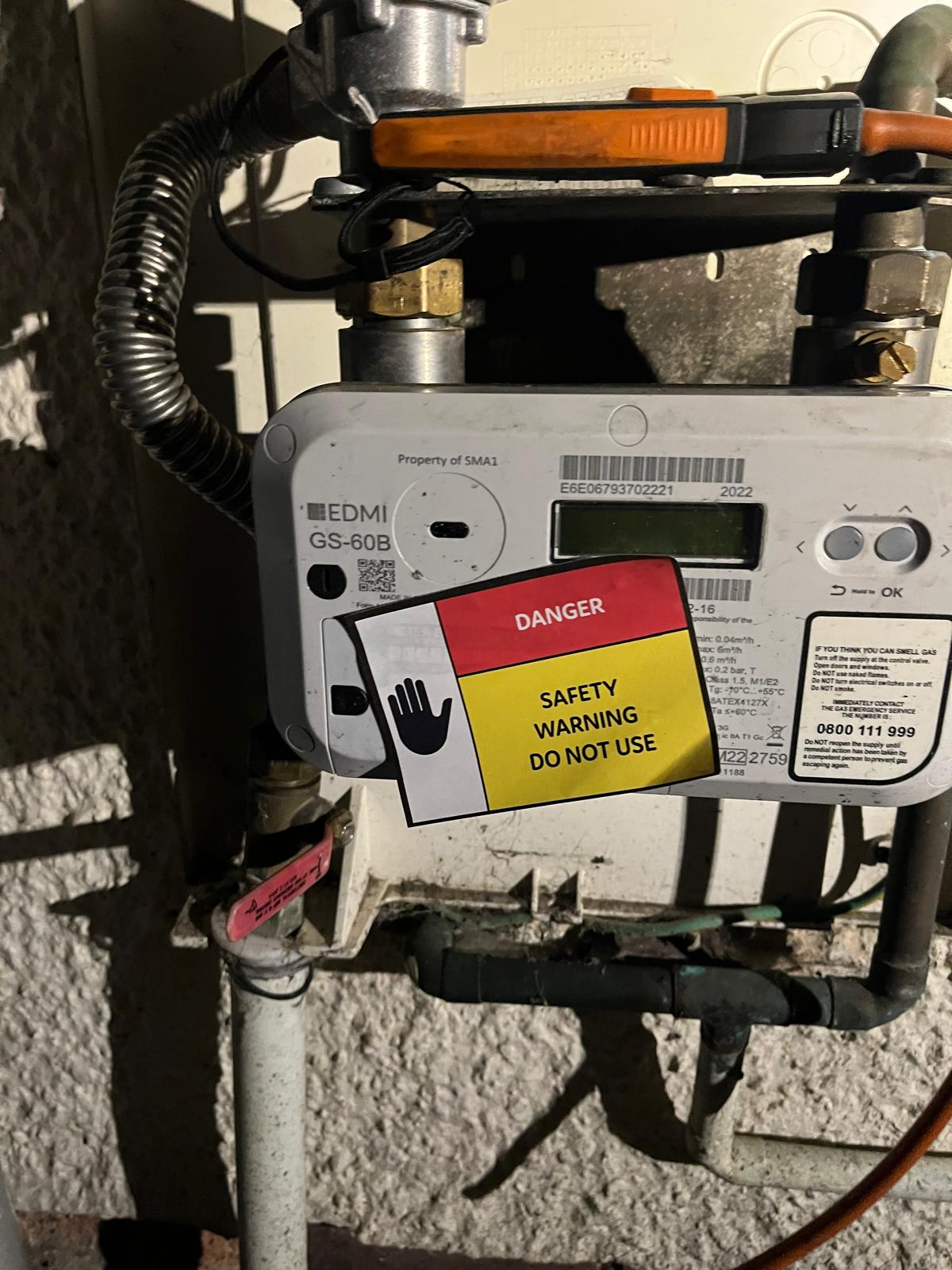
Had your gas capped off after a meter replacement, boiler job, or safety check? You’re not alone — and from October 2026, it’s going to happen a lot more often. Tighter gas testing rules are coming in, and even a small pressure drop on a gas tightness test can no longer be overlooked. If the test fails, the engineer has no choice but to isolate appliances or cap the supply until the fault is properly traced and repaired.
This doesn’t mean the engineer is being difficult. If your installation has failed a gas tightness test, it cannot legally be left as it is. This guide explains exactly why it happens, what it means for you, and what to do next — especially if you’re in Leeds or West Yorkshire.
What’s Changing from October 2026?
Up until now, engineers have had some flexibility. A small pressure drop during a gas pressure test could be left in certain circumstances — for example, if there was no smell of gas and the drop was within accepted limits. From October 2026, that changes.
Under the updated rules, any movement on a gas tightness test has to be investigated properly. It can’t be ignored, it can’t be left, and it can’t be signed off without being traced. If the engineer finds a pressure drop and can’t resolve it within the time they have on that visit, the safest and only legal option is to disconnect appliances or cap the gas supply off and leave it safe.
This is why a routine job — such as new gas meter installation, boiler service, a landlord gas safety certificate, a new appliance installation — can suddenly turn into no heating, no hot water, and a bill you weren’t expecting.
Why a Simple Gas Job Could Leave You With No Gas
Here’s the reality of how it plays out. An engineer turns up for a normal booked job — say a boiler repair or a gas safety check. He runs the gas tightness test as required and finds a pressure drop. Under the new rules, he now has to investigate and trace it properly.
But tracing a gas leak or pressure drop takes time. It means isolating appliances one by one, testing each section of pipework, and in some cases measuring the full pipe run to calculate what pressure drop is actually allowable for that specific installation. Most engineers don’t have hours spare during a standard booked job to chase faults around an entire house.
So the decision gets made: cap it off, leave it safe, and the customer needs to get a Gas Safe engineer back to trace and resolve it properly. That’s not a choice — it’s what the rules require.
Jobs where this is most likely to happen: meter replacements (including smart meter upgrades), boiler repairs, landlord gas safety checks, new appliance installations, and gas fire servicing.
Why Older Homes in Leeds and West Yorkshire Are More at Risk
Older properties are more likely to be affected, and there are good reasons for it. Pipework ages, joints wear, seals dry out, and some older installations were never sleeved properly. Corrosion builds up over time on copper pipework and fittings. Old gas fires, gas cookers, and older hobs are particularly prone — the seals on these appliances can dry out and allow a tiny amount of gas to pass, which shows up as a pressure drop on test.
Before October 2026, that kind of small drop could often be left if it sat within limits and there was no gas smell. Under the new gas rules, it has to be traced and either repaired or proved safe through a full calculation — and that’s a much bigger job.
In Leeds and West Yorkshire, we see this a lot in Victorian terraces, older semis, and houses that have had the same gas appliances in place for 20 or 30 years. The pipework might have been fine for years, but the new testing standard exposes things that were previously just accepted.
Smart Meter Installed and Now No Gas?
This is where I think a lot of people are going to get caught out, and it’s worth being really clear about it.
When a smart meter is installed, the meter engineer carries out a gas tightness test as part of the process. If they find a pressure drop, they’re not there to start chasing it around your house — that’s not what they’re booked for, it’s not what they’re equipped for, and it’s not within the scope of their visit. The gas gets capped at the meter, you get told to call a Gas Safe engineer, and that’s that.
For the customer, what should have been a straightforward meter swap turns into no gas, no heating, and no hot water — often with no warning that it was coming. I wouldn’t be surprised if this puts a lot of people off smart meter upgrades altogether, especially in older homes where the installation hasn’t been tested properly in years.
 If your gas has been capped after a smart meter installation, do not attempt to turn it back on yourself. It must be reinstated by a qualified Gas Safe registered engineer.
How Much Could It Cost to Sort Out?
There’s no simple fixed price for this kind of work, and any engineer who quotes you one before they’ve seen the job should be treated with caution. The cost depends entirely on where the pressure drop is coming from and how straightforward it is to trace.
In Leeds, gas engineer day rates typically run somewhere around £300–£500 depending on the company and the job. Here’s a rough idea of what the different scenarios might involve:
- If the pressure drop is coming from one or two appliances — an old gas fire or a worn cooker seal — it could be relatively straightforward. Isolate the appliance, retest, prove the pipework safe, and reconnect what can be reconnected. A few hours’ work.
- If it’s on the pipework itself, the engineer has to trace the full installation, identify where the leak is, and repair or replace that section. Hidden pipe runs, boxed-in sections, or pipework buried in concrete floors make this significantly harder and more expensive.
- Worst case is when the leak is in a pipe run that’s inaccessible — under a floor, behind a wall, or buried under screed. That can turn into a full new gas pipe run through the property, and the costs climb accordingly.
We had a job in Pudsey not long ago — straightforward house, just had a smart meter fitted, gas capped on the day. Took us half a day just to trace the drop to a pinhole in a copper section running under the kitchen floor. Nothing dramatic, but it was there. That’s the reality of older installations.
Rough cost guide: simple appliance isolation and retesting, £100–£300. Pipework trace and repair, £300–£700+. Full new gas pipe run, potentially £1,000 or more depending on the property.
What To Do After Your Gas Has Been Turned Off
First — don’t touch it. If it’s been capped or an appliance has been disconnected, leave it alone. Only a Gas Safe registered engineer should reinstate the gas supply or reconnect appliances.
The engineer who turned your gas off or disconnected an appliance should have left you a warning notice or a written record of what they found. Hang onto that and pass it on to whoever you call to sort it — it tells them exactly what the issue is and saves time.
When you’re calling around for a Gas Safe engineer, be upfront about the situation. Explain what happened, mention the warning notice if you have one, and ask for their hourly or day rate rather than a fixed price — because until the job is traced properly, no one can give you an honest fixed price.
Most importantly, get it done properly. The temptation when you’ve got no heating and no hot water is to find someone who’ll just reinstate it quickly and worry about the rest later. That’s how problems get buried and come back worse. Find someone who’ll trace it, fix it, and leave the installation genuinely safe — not just back on.
Gas Turned Off in Leeds or West Yorkshire?
If your gas has been capped off or an appliance disconnected following a safety check, meter replacement, or any other gas work, we can help. We’re a Gas Safe registered company based in West Yorkshire, covering Leeds and surrounding areas including Pudsey, Horsforth, Morley, and Bradford.
We won’t rush in just to get the gas back on and get off to the next job. We’ll trace it properly, explain what we find, and make sure it’s genuinely safe before we leave. Give us a call or drop us a message — honest advice, no hard sell.
Attila Boruzs
A Tech Installs Ltd
Gas Safe Registered Boiler Installer — Leeds & West Yorkshire